
International Non-Binary People's Day 26'

By Luka Pinches
By Luka Pinches
International Non-Binary People’s Day is on the 14th of July every year, sitting directly between the international celebrations for Women’s and Men’s Days. It is celebration as well as a way to raise awareness of the issues faced by non-binary people around the world.
An important note: gender fluidity is not a modern concept. Despite the official ‘Day’ not being celebrated for more than 15 years so far, it is important to remember that there’s documentation of a third gender throughout all of history across numerous cultures. In Indigenous American cultures, they recognise people in their communities who are believed to embody both a male spirit and a female spirit as ‘two-spirit’. The term is only appropriate for Native Americans, as it hold great status to be ‘two-spirit’ and is a highly ceremonial role. In South Asian society, the most common
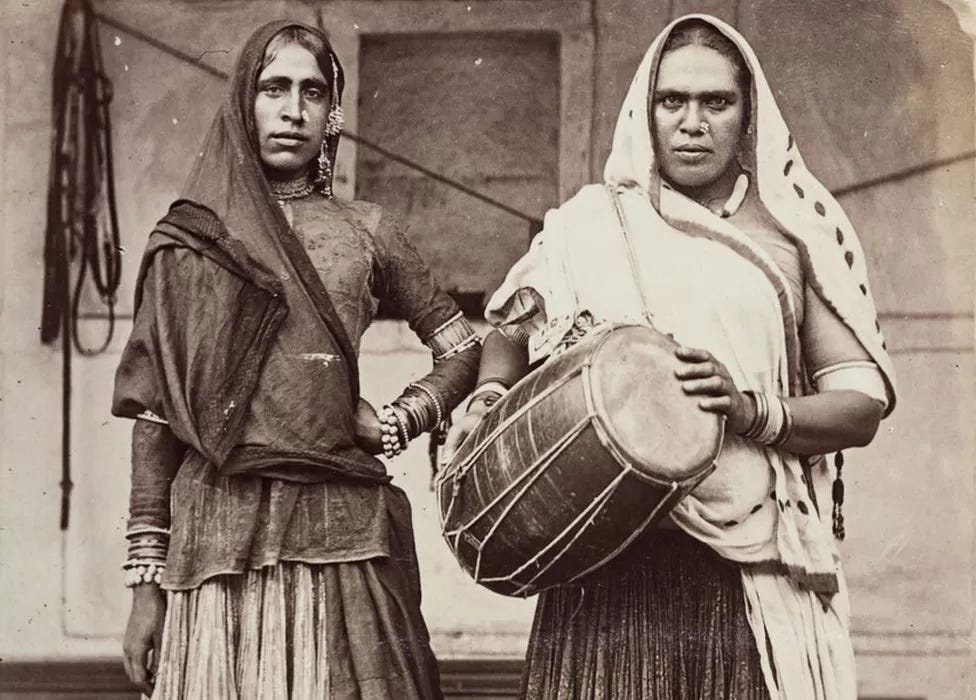
Hijras est. 1890
non-binary identity is known as ‘Hijra’ and is often referred to as the third gender. Mention of the Hijras can be found throughout South Asia’s history and even in some Hindu religious texts. Some ethnic groups of Indonesia recognise a further 3 genders outside of the binary; Calalai, Calabai and Bissu. There is even mention of a third gender in the Kama Sutra which was written in roughly the 3rd century CE – more than 1700 years ago.
The language used to describe these people has evolved since the first mention of genders outside the binary:
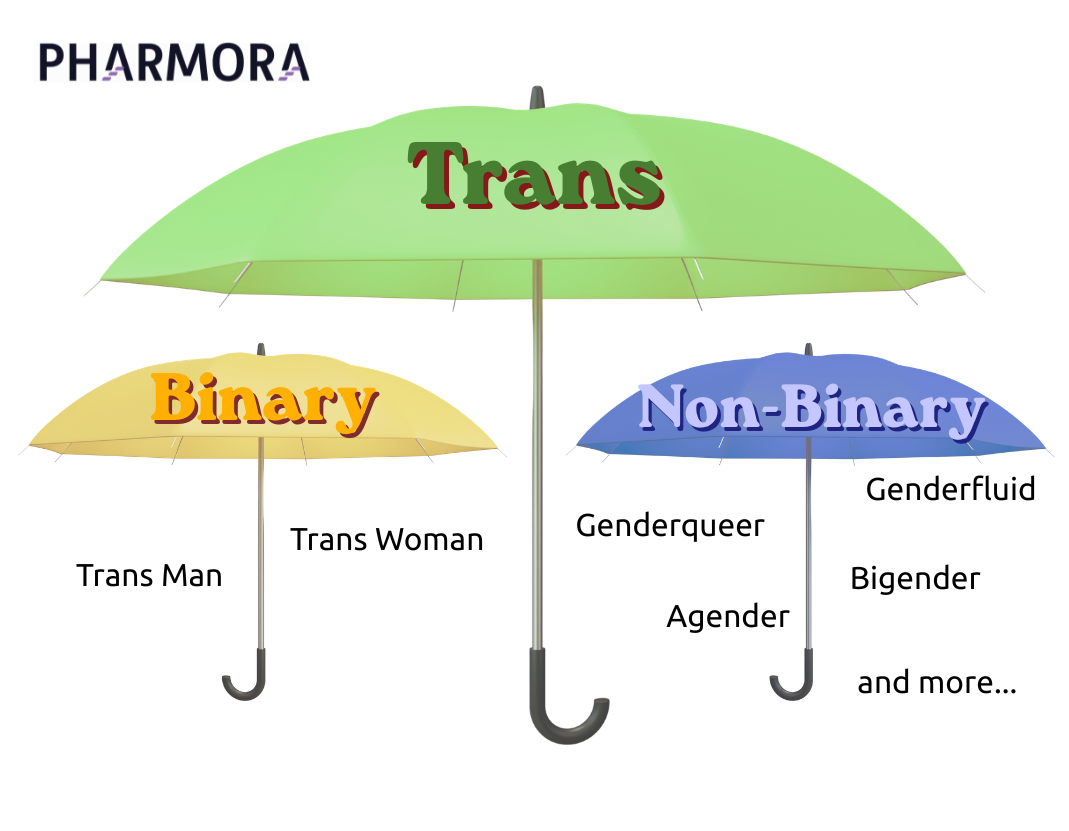
As you can see in the graphic above, ‘non-binary’ is an umbrella term encapsulating any gender identity falling outside of the binary. The term ‘trans’ or ‘transgender’ describes someone who does not identify with the gender they were assigned at birth. Naturally, non-binary does not describe transgender men or women since they are binary genders. Another important note: The way someone expresses themselves is not equivalent to their gender identity. If I may pose a question – if a man wears a skirt, is he still a man? If a woman wears trousers, is she still a woman? On this day of awareness, it is salient to work at identifying, discussing and breaking down any preconceived notions that you may have – particularly around expression vs identity. In case of doubt, there’s nothing wrong with simply asking someone what their pronouns are, instead of guessing based on their external appearance.
There is much debate around the number of non-binary or gender non-conforming people in the world. Whilst there are lots of statistics out there, they are usually unreliable due to a number of factors. Transgender populations are untracked in many countries leaving a deficit of internationally comparable information to provide context. Secondly, if a person lives in a society that is less accepting of transgender people – or LGBTQ+ people in general – they are unlikely to answer surveys truthfully and therefore, it’s difficult to collect accurate data. Bearing this in mind, the statistics from the most recent ONS study (2023) revealed that 0.5% of the population reported their gender identity was different to the one assigned at birth. For some context, 45.7 million people (94% of the UK population) answered the survey and of those, just 262,000 (0.5%) people said “No” and of those, only 30,000 (0.06%) identified specifically as ‘non-binary’. When people feel safe openly living as their authentic selves, they feel more confident asking for help when things go wrong. It’s important to be accepting not just to foster a kinder society, but also to help minority communities feel secure enough to access the help they need.
Medically speaking, identifying as non-binary or anything under that umbrella doesn’t intrinsically increase your susceptibility to any illness however, there have been links to elevated rates of substance use or mental health struggles across all LGBTQ+ identifying people. This is not a feature of who they are, but a consequence of the way they are treated. In particular, members of the trans community are some of the most oppressed members of the LGBTQ+ community. This oppression comes in many forms but one of the most insidious is lack of visibility, which can make it difficult to access care and support services. It’s been found that non-binary people specifically experience higher occurrences of depression and suicidality. It’s vital that we have days of celebration like this, to bring awareness to the experiences of non-binary people and take action against transphobia.
How to show support today:
- Use gender-neutral language
- Respect names and pronouns
- Add your pronouns to emails or intros
- Not making assumptions on a person’s pronouns based on their appearance
- Share resources or content that educates and uplifts
Finally, just because you don’t understand something, doesn’t mean it’s wrong. It shouldn’t be the responsibility of your non-binary or LGBTQ+ team members, family or friends to educate others on this matter. It’s crucial that we make an effort to understand but regardless of understanding, we all have a duty to make people feel seen and respected for who they are.
Please follow this link to visit our Home Page and find out more about Pharmora!
