
World Autism Day
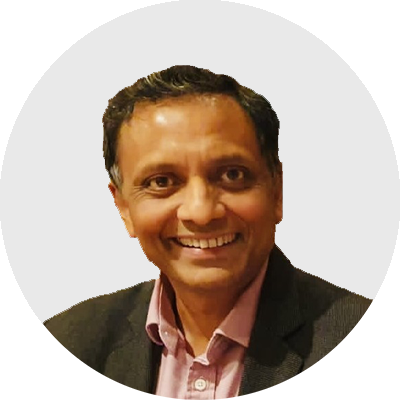
By Arunesh Sil - Faculty Speciality Training Lead
As the world recognises and ramps up the awareness of autism on the World Autism Day, our personal journey as parents of our autistic son comes to the forefront this day.
This blog is not so much about autism as it is about acceptance and awareness.
‘Time is money’ as they say. For us the learning has been somewhat different. We have grown and learned to understand that time is wealth, something that is far greater than its circumscribed transactional definition of money, and includes in a more expanded form, the wealth of knowledge, awareness, wisdom, health and more profoundly, life itself in its most dynamic form.
As parents our personal life journeys took on a very exciting turn with our son being born around 18 years ago; he is now 18 years old. Parenthood changes the perspective of life for sure but in our case, we were brought face to face with our son’s diagnosis of autism when he was around 3 years old, and our worlds turned upside down. He had severe autism with learning disabilities and several developmental delays and that is when life started to speak a very different language to us.
In the past 18 years, our involvement with time has been of a completely different intensity than we have ever known before. He was nonverbal until around 7 years of age, and was potty trained not until he was around 11 years old and continues to have issues and challenges including recurrent epileptic seizures. However, every event that unfolded with his physical and mental development has taught us something that we would never have known with conventional wisdom and practice.
They told us that this is just ‘one of those things’… and that he just would have to live with it. When in school, we were told that there was no chance he will go to a secondary school, leave alone college.
However, we were not restrained by the results of the studies, trials and conventional wisdom for the life inside us is a far bigger phenomenon that what can be analysed or predicted. For us hope was not good enough and certainly not a strategy.
We took the route of involvement and commitment. I embarked on a career change, and my wife gave up her career to become a full-time carer. With close observation and awareness, we found that every milestone in his growth and development showed us clues and pointers to enhancement and we used that learning experience to challenge him in the right direction and with the right intensity. For us every moment is a process, every process an experiment and every experiment is an opportunity to learn.
We turned to the discipline of yoga, meditation and ayurveda ourselves and encouraged him towards the same. The change of diets, sleep discipline, and activity modification provided a transformation beyond belief.
Today he goes to a college and is good at maths and music. He still needs support and continues to have seizures unfortunately but has significantly outstripped the negative predictions that he was born with.
If there is one learning that time has given us in this journey, that is very simply, that autism is not a label or a limitation. It is a way of living that employs a different perspective to what is conventionally defined as normal.
While our personal campaign centres around awareness and acceptance of autism, it is also our sincere wish and hope that there is an increased recognition of the importance of individual potential among autistic children and adults. Just as every neurotypical child and adult is different, the same is true for neurodivergent children and adults as well.
If neurodivergence is seen as an asset rather than a liability, it can significantly empower organisational, institutional and even social infrastructure. We have no doubt that with the increase in awareness of neurodivergence, the collective vision of our society will continue to transform and enhance in the times to come.
The government today is trying various means and methods to provide support for neurodivergent people which is appreciated. However, there are ground level challenges where the integration of their skills remains to be understood by future employers. We currently have skills shortages in many fields in the UK. Yet, according to a government report (1), in the 2024/25 financial year, only 34% of disabled people with autism were in employment as compared to 55.3% of all disabled people and 82% of non-disabled people. According to NAS 77% of unemployed autistic people want to work.
We as parents have many a times found ourselves pitched against many challenges to help and support our children in the hope of making them lead independent lives with some additional support. Today there are more parents on this formidable journey waiting for the diagnosis and for their EHCP reports to know about the extent of the support or provision that their child can get. What underpins this mammoth effort is the simple aspiration to help their child reach their full potential as a happy and healthy individual.
Our hope on World Autism Day is that businesses reconfigure their operating model around the needs of people and individual development rather than just dispensing a transactional framework to run the economic engine which often comes at a great cost to people’s lives. We need to build the ground level infrastructure that will support these talented individuals with unique skills to contribute and become a strength for the economy rather than a socioeconomic burden which is how societies in general perceive them today.
Reference:
1. Autism policy and services: Employment; House of Commons library; 7th November 2025; accessed 28/03/2026 (https://commonslibrary.parliament.uk/research-briefings/cbp-10389/#:~:text=Employment%20rates,autistic%20people%20want%20to%20work.)
